
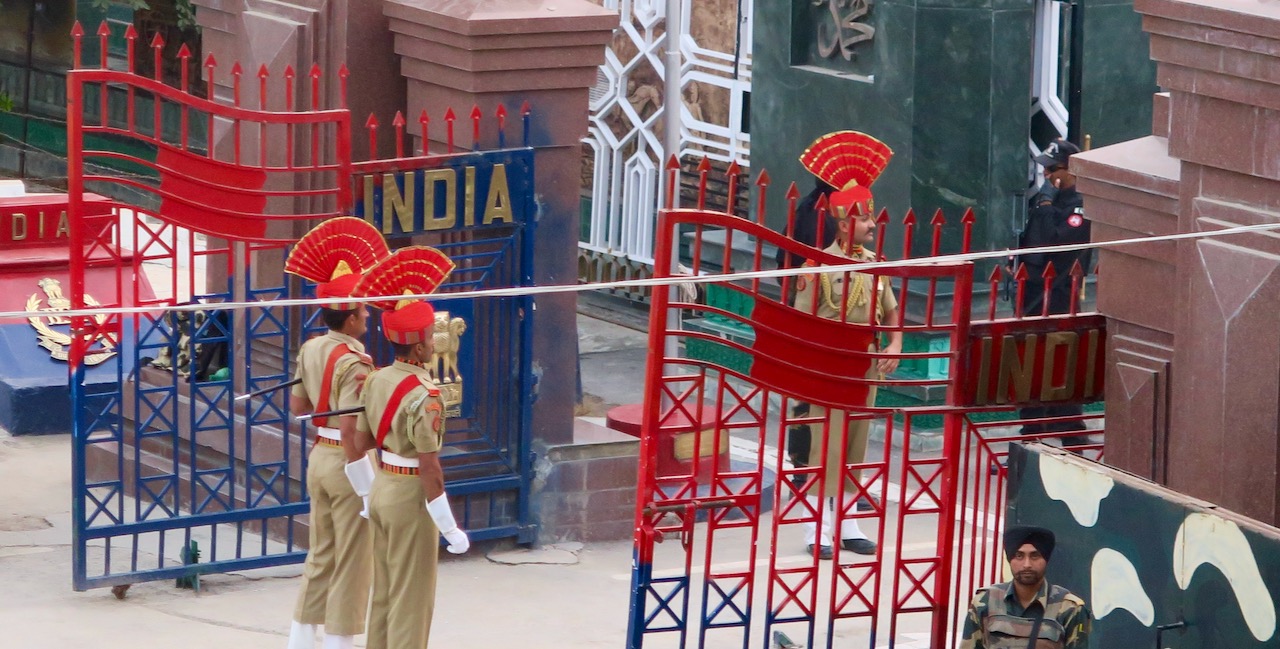
One of the undoubted highlights of a visit to the Punjab is witnessing the dramatic ‘Beating Retreat Ceremony’ which is performed daily by Indian and Pakistani soldiers at the Wagah-Attari border crossing. As the purpose of this ritual is to formally close the border crossing for the night, it occurs in the late afternoon all year round just before sunset.
This ceremony at the most prominent border crossing on India’s Grand Trunk Road, has been practised since 1959. It is a ritualised drill featuring high step leg raising, called ‘Goose marching’, and the shouting of patriotic slogans such as ‘Jai Hind’ (Victory to India). It is also a symbol of the hostile rivalry between the two countries which separated as a result of Partition in 1947.
Wagah is 32 kilometres from Amritsar on the Indian side and 24 kilometres from Lahore (in Pakistan), the pre-Partition capital of the Punjab. Unfortunately, although Lahore is so very close it is incredibly difficult to obtain a Pakistani visa to visit this ancient city.

In August 2016, a taxi was booked by my Amritsar hotel to take me to this event. The trip takes about an hour. As we neared the official parking area at Khasa village, the traffic got heavier. Billboards lining the approach were militaristic inviting young Indians to join the BSF (Border Security Force) and hinting at previous conflicts with Pakistan. There is a security check point just after this village where foreigners need to show their passports to gain entry – no cost is involved.
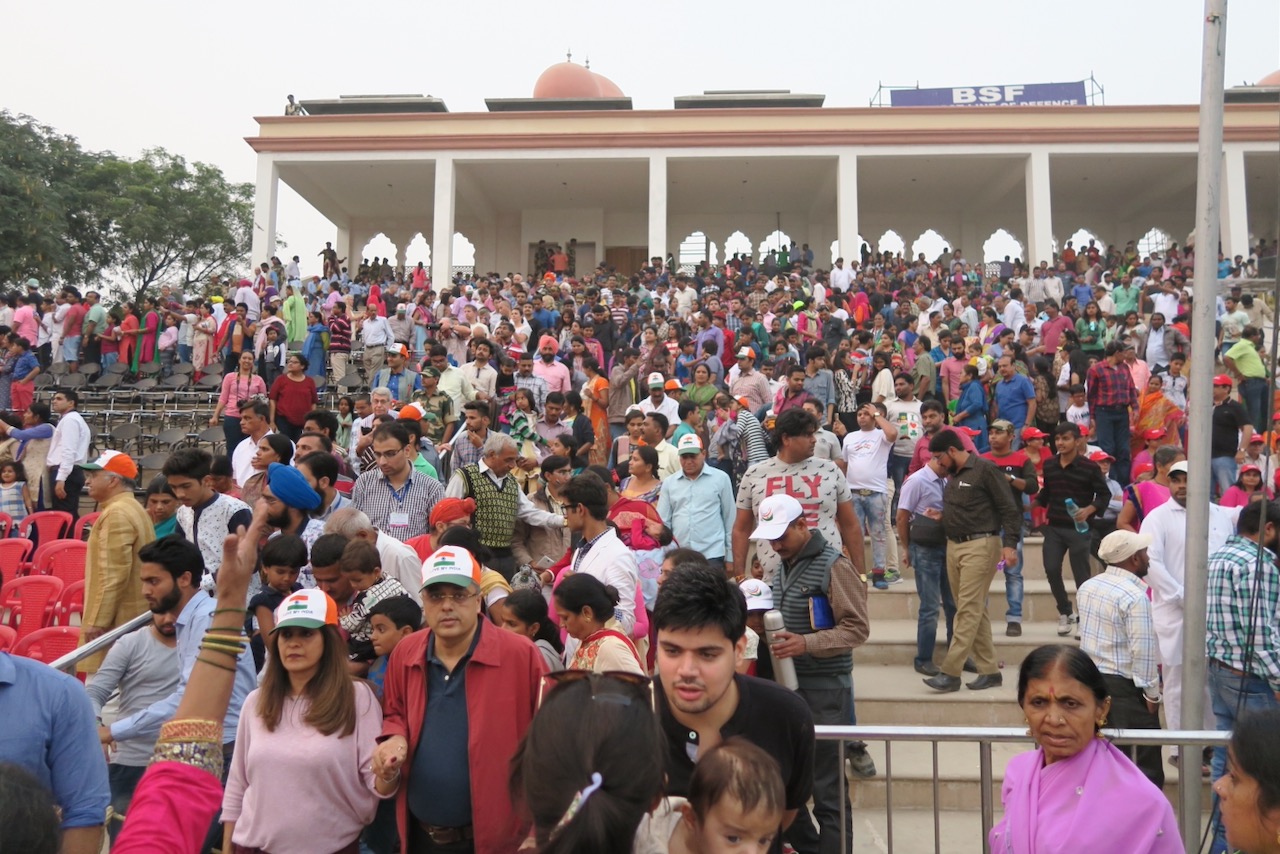
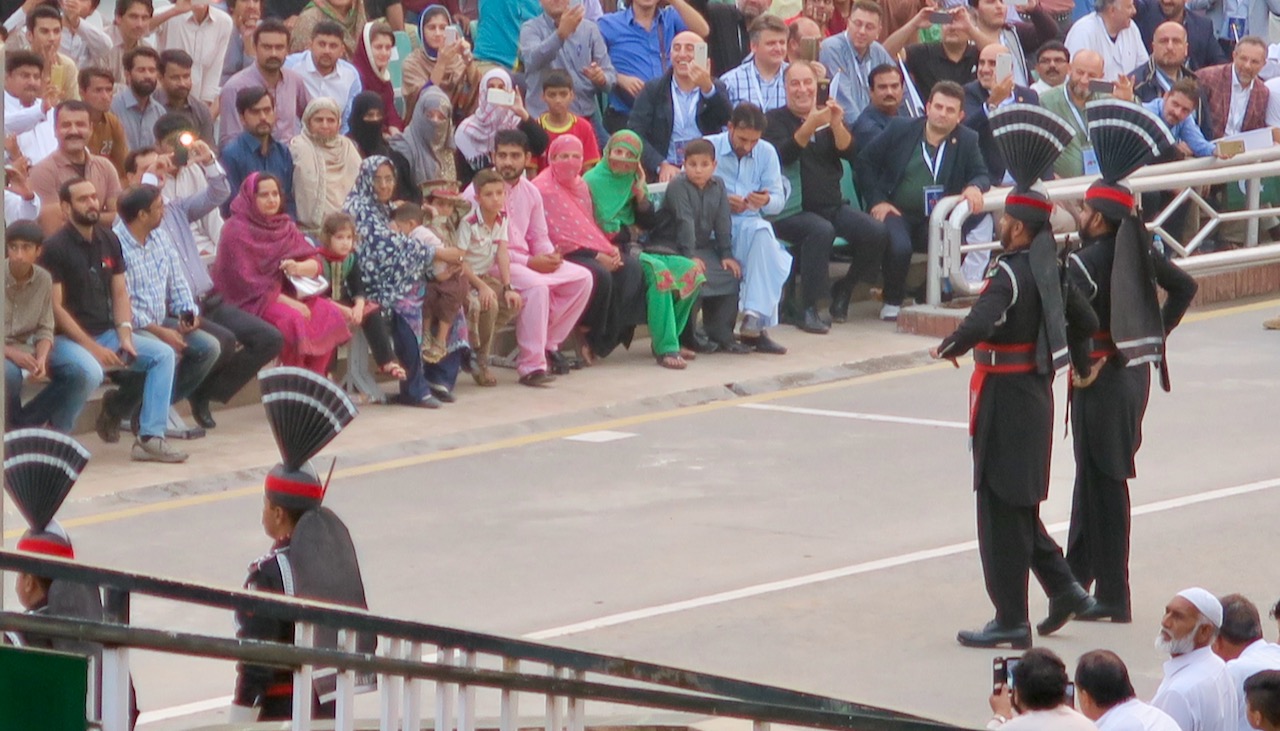
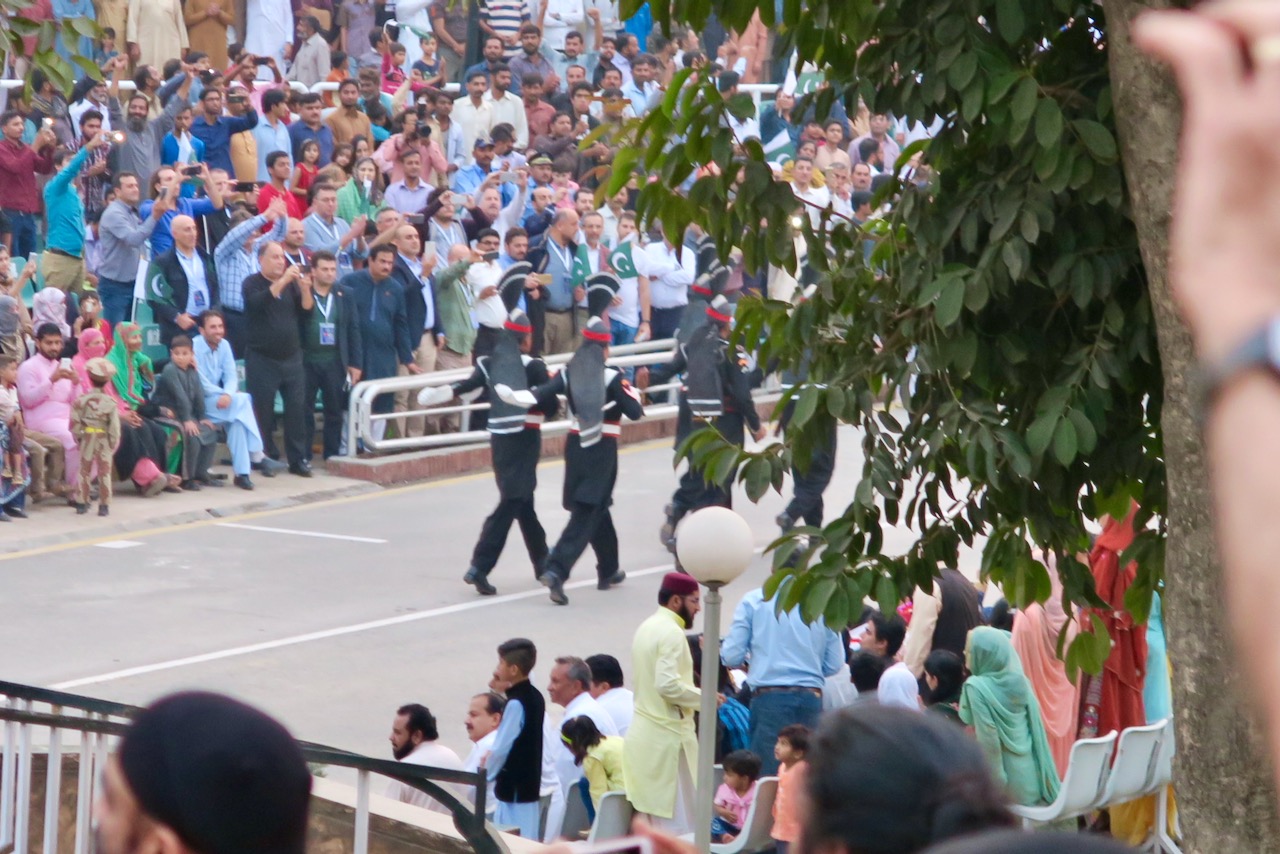
There was a crowd of thousands on the Indian side and a much smaller number on the Pakistani side of the border. The Indian crowd was very jingoistic with the passionate singing of Bollywood songs and dancing before proceedings got underway. Much quieter on the Pakistan side of the gates. To get a good seat you need to arrive a good hour or so beforehand. There is a separate section just for tourists, with good viewing of the spectacle.
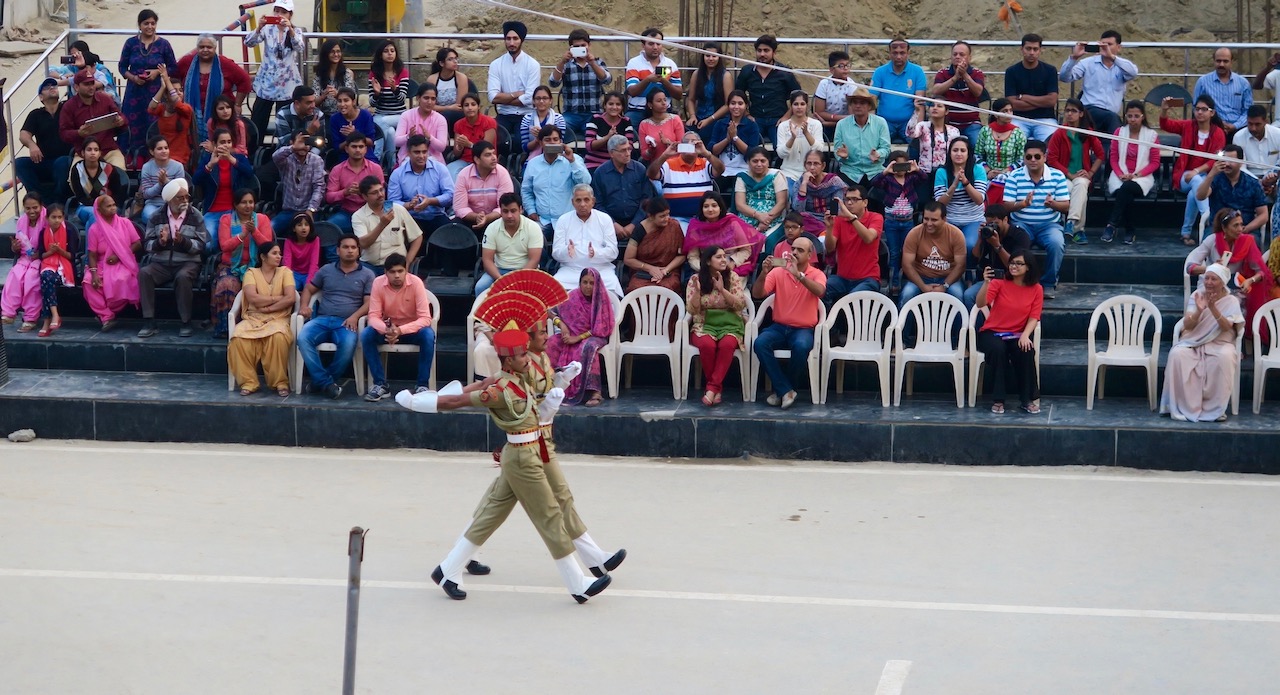
As the evening set in, the ceremony began first with two very hostile looking soldiers, an Indian BSF soldier and a Pakistani Ranger, both in dark sunglasses and with automatic rifles at the ready, appearing and marching right up to their respective locked gates. They then faced off for the whole 45 minutes of the performance.
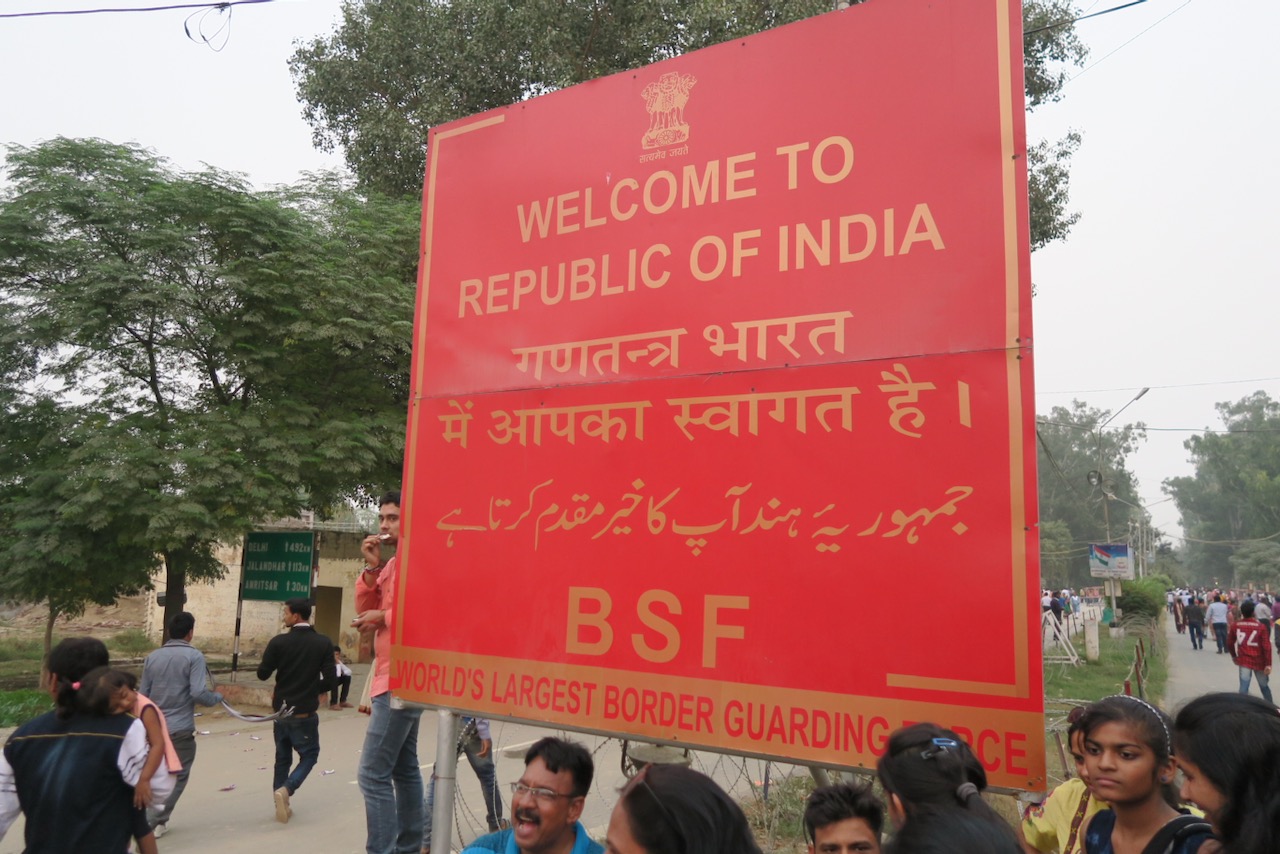
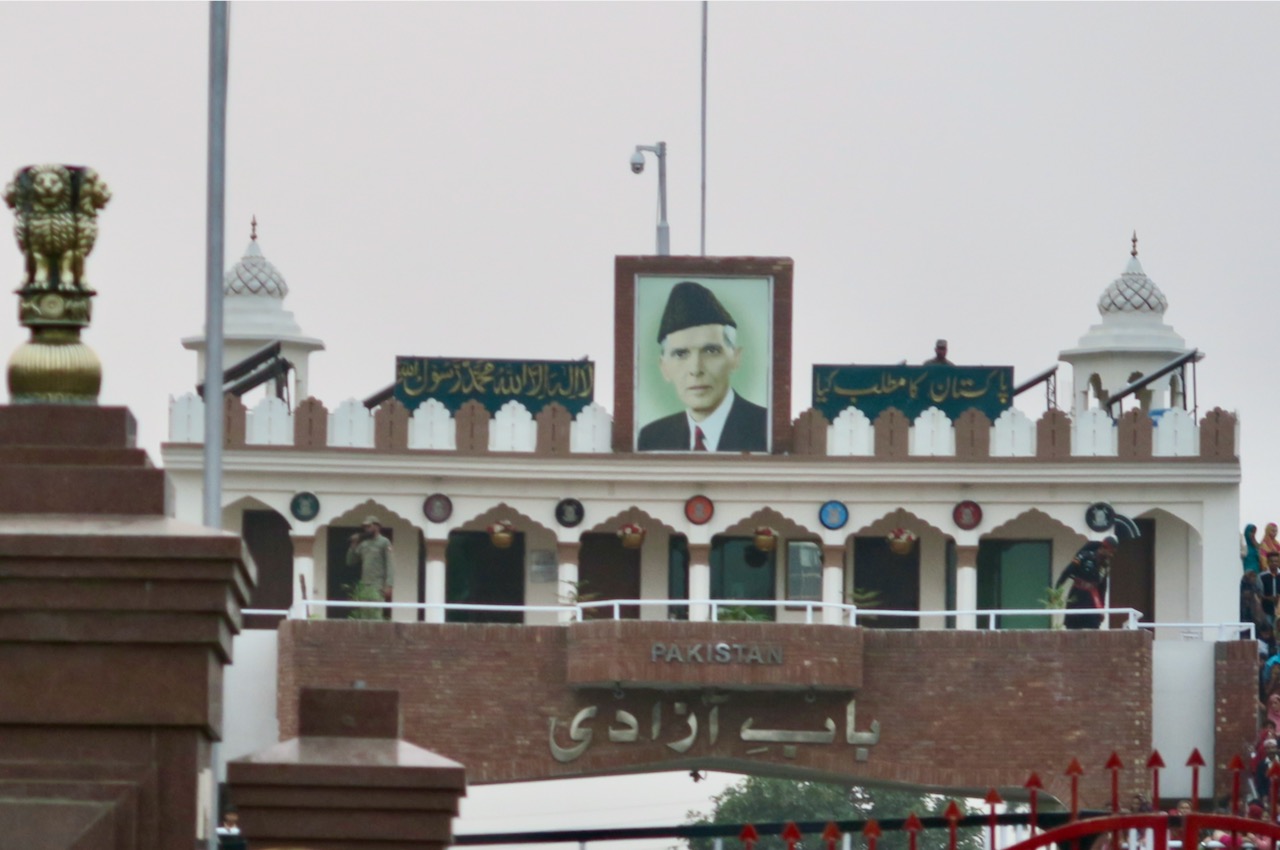
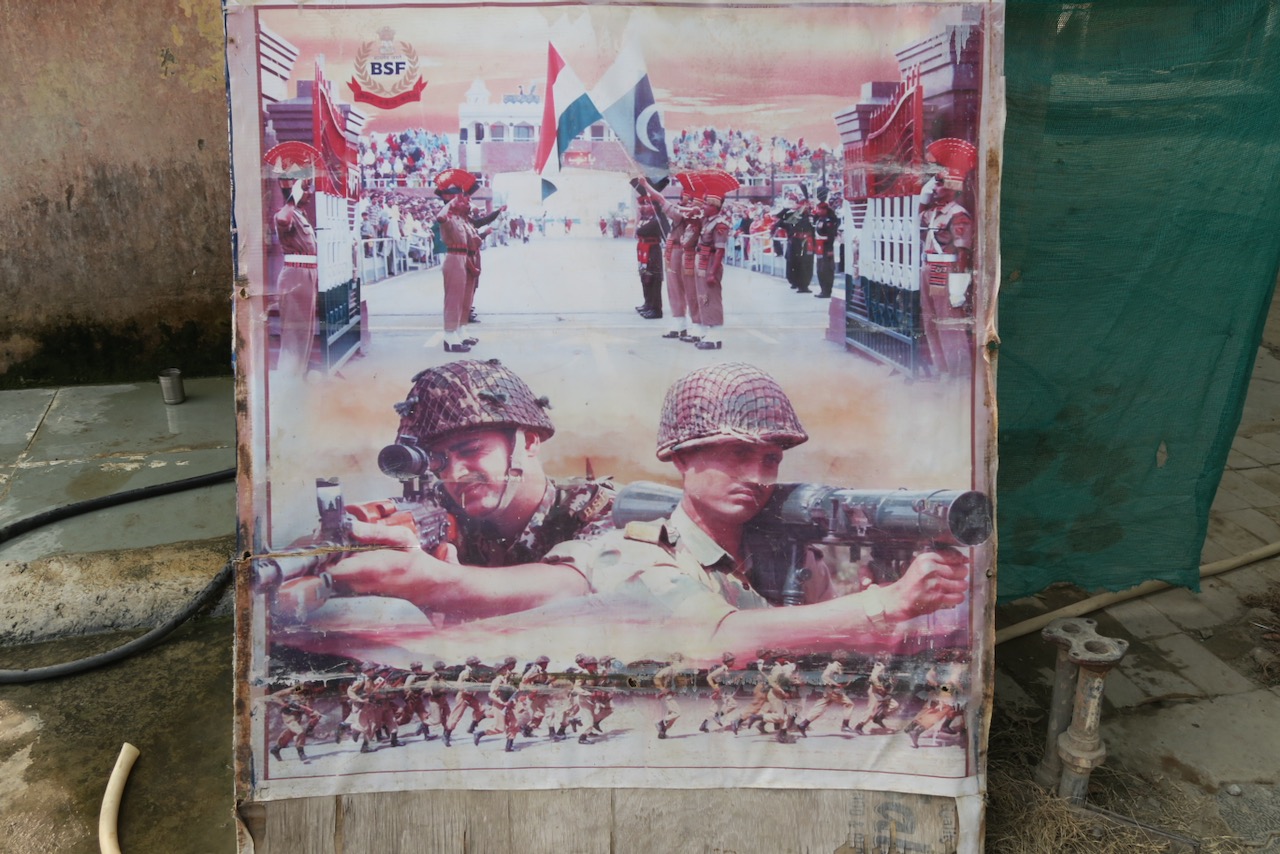
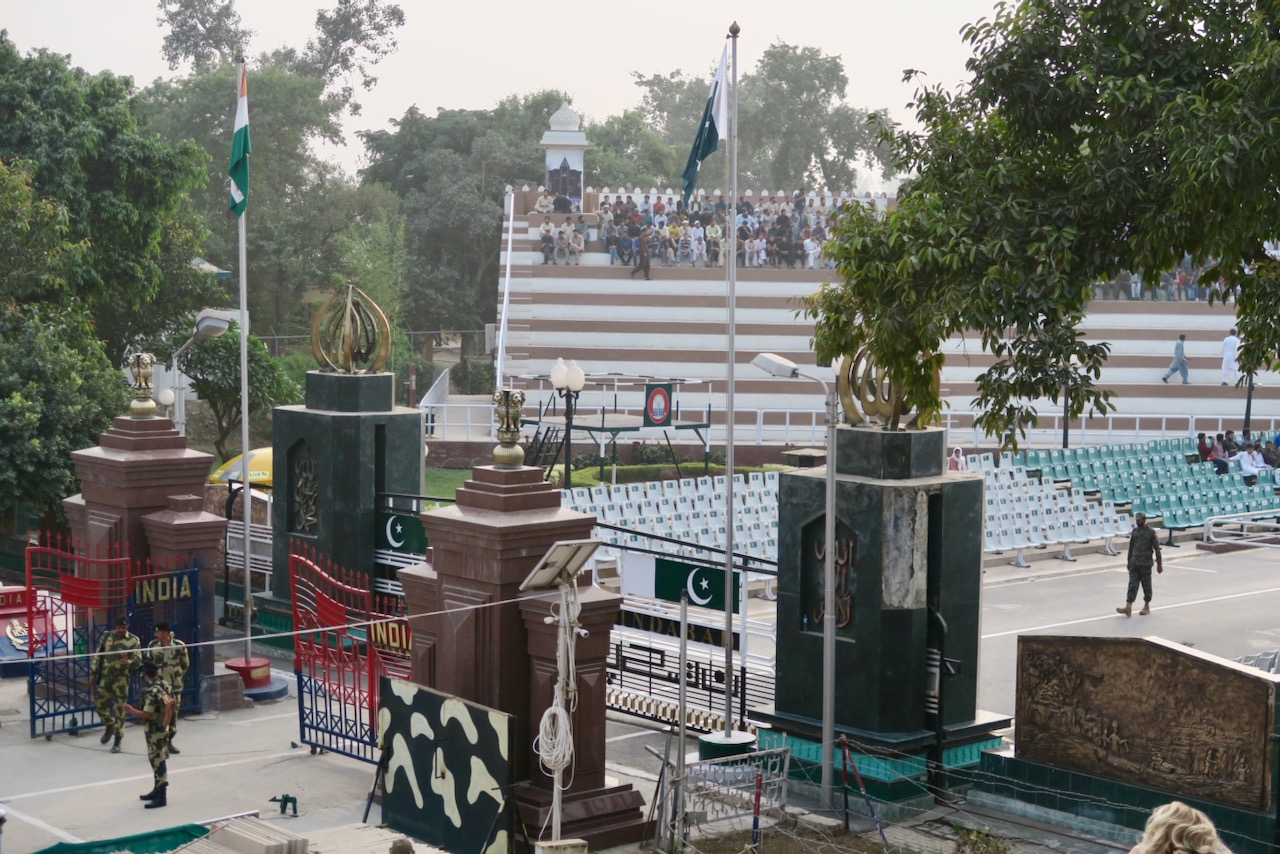
After a period of choreographed marching, first in pairs then in larger groupings, the gates were opened on both sides. The national flag of India with its orange, white and green colours, and the green Pakistan flag with its white crescent were simultaneously lowered from the flagpoles and folded. The ceremony ended with the orderly retreat of all soldiers.
The show is then over and the Indian crowd plus tourists head back the few kilometres to Khasa village where the buses and cars are parked. There seemed to be no management plan for the dispersal of a crush of buses, cars, trucks and auto-rickshaws which appeared to all want to to be first to get onto the the road back to Amritsar.
Unfortunately, in 2014 on the Pakistan side of the border shortly after the ceremony, there was a suicide terrorist attack which resulted in 60 people killed and over 110 injured.
It is indeed a memorable event which shows the extent of patriotic passion especially amongst the far more boisterous and generally younger Indian audience, though I didn’t sense what has been called the ‘spirit of friendly rivalry’. The obvious pride that Indians have for their country and their Hindu President Narendra Modi is what I came away with.


 Cliver's Punjab Blog